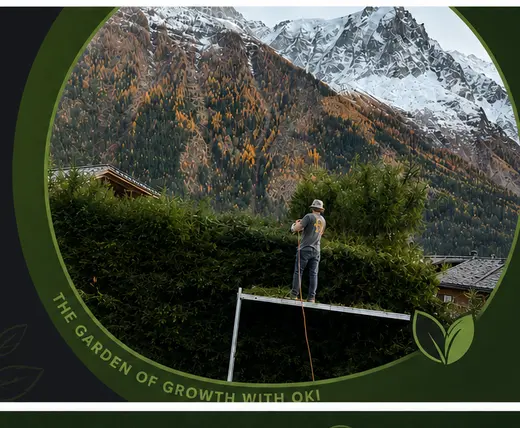
What grows above and below.
Soil, roots, irrigation, drainage, existing vegetation, new planting, plant health, pruning and fertilisation are considered as one system.
Who we are
A close, practical approach to gardens, materials and complete outdoor spaces in the Chamonix Valley.
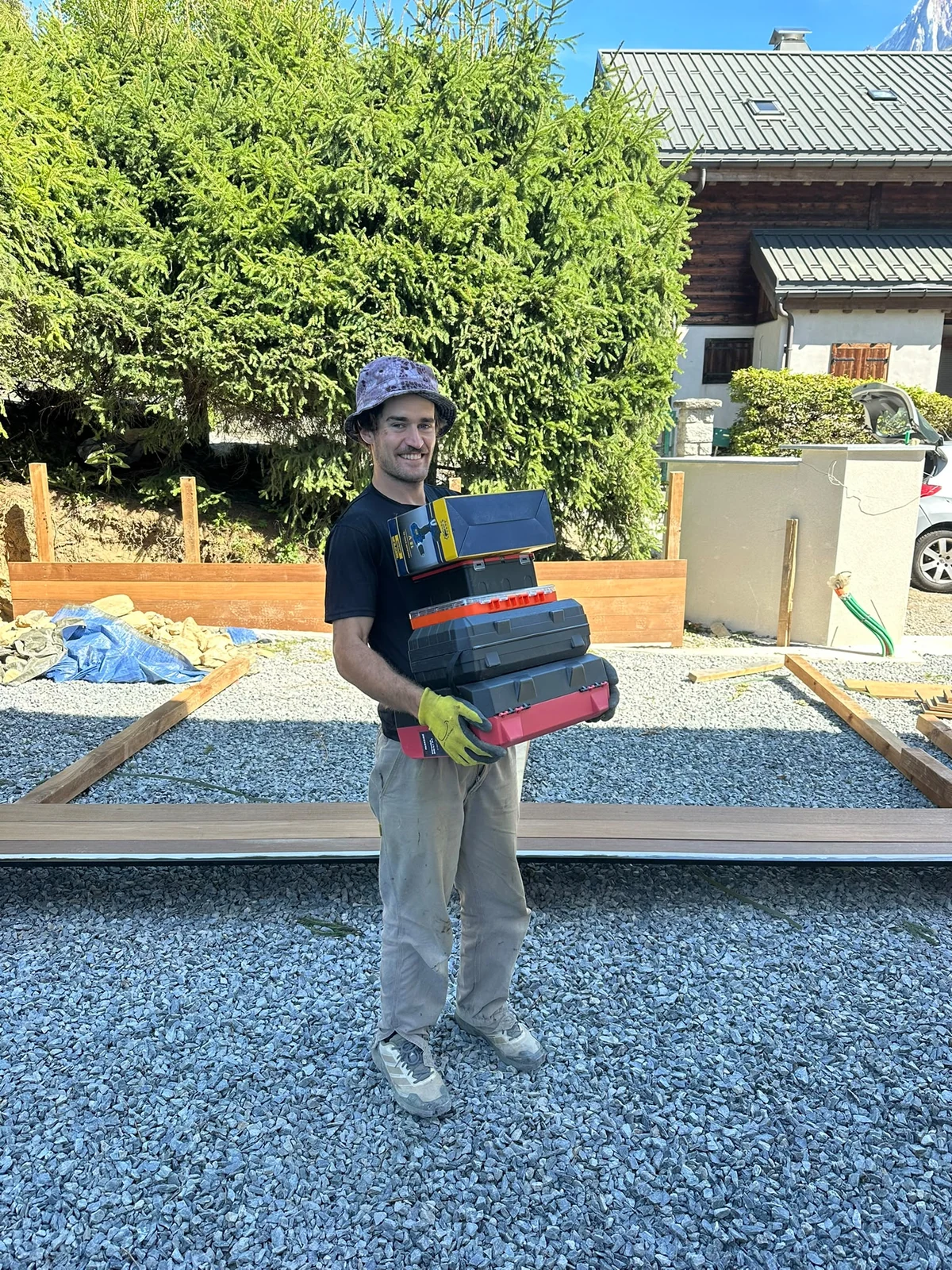
Who is Oki?
I’m Octavio Salles — Oki — a forest engineer and the founder of The Garden of Growth with Oki.
We combine knowledge of nature, soils and materials with practical experience in gardening, outdoor maintenance, landscaping and wood restoration. This helps us create durable, functional solutions adapted to each space in Chamonix and the surrounding valley.
Our philosophyOur way of seeing a garden
A garden is not only what grows. It is the complete outdoor living system around a residence: the landscape, the people who use it and the materials that make it work.
Our assessment considers every connected area above and below ground, from vegetation and water to access, structures and places for rest.
Soil, roots, irrigation, drainage, existing vegetation, new planting, plant health, pruning and fertilisation are considered as one system.
Paths, terraces, entrances and areas for rest, recreation and leisure should be comfortable, coherent and ready to use.
Exterior walls, boundaries, furniture, supports, shelters, timber structures and practical details influence how the garden works.
Restoration, painting, repairs and general maintenance keep the residence cared for when plant growth slows.
Wood connects practical work with the living world. It brings warmth and can be repaired, restored and adapted rather than discarded.
Understanding its grain, movement and response guides how we build, repair, protect and maintain each piece.
Grow, restore, preserve. Plants capture carbon dioxide from the atmosphere as they grow, and wood keeps part of that biogenic carbon stored while it remains in use. Restoring a table, structure or fence can extend both its useful life and the time that carbon stays in the material. As a general IPCC reference, dry woody biomass is estimated at about 50% carbon by mass; the exact value varies with the material.
How we work
We begin with the client’s needs, read the complete property and turn the analysis into clear tasks and priorities.
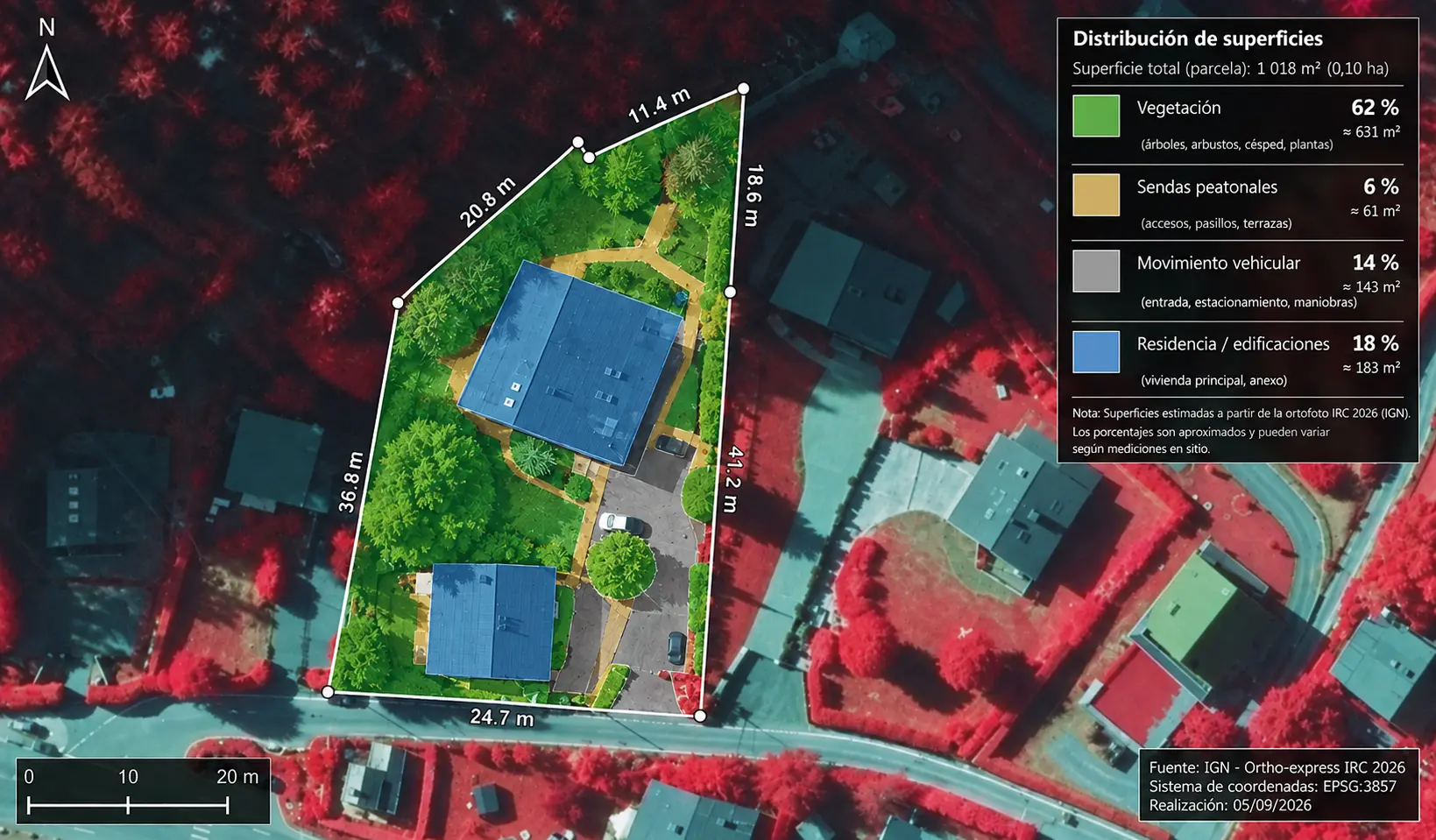
Example of sector identification and estimated land-cover distribution. Measurements are checked on site before decisions are finalised.
We listen to what the client needs, how the property is used and what a successful result should look like.
We document the overall setting and the useful details to create a clear starting point.
We identify sectors, circulation, vegetation, slopes, water, structures and areas of interest before studying each detail.
Work is organised from urgent and important needs through important improvements that can be planned.
We define what will be done, the materials and logistics needed, and what remains to be confirmed.
The agreed work is carried out carefully, with before, during and after records when useful.
We leave the area tidy, review the result and discuss any additional improvement before adding time, materials or cost.
Urgent and important: safety, damage prevention, blocked access or immediate risk.
Urgent: time-sensitive or operational tasks that should be resolved quickly.
Important: work that protects quality, durability and the long-term condition of the site.
Planned improvements: aesthetic, preventive or seasonal actions scheduled in the right order.
The expert visit can be summarised with photographs, identified sectors, observations, priorities, materials and proposed next steps.
Our direction
Technical understanding, practical execution and respect for the place guide every intervention.
Observe the site, listen to the client and choose a solution suited to the property, materials and season.
Turn needs into clear improvements through honest communication and careful hands-on work.
Build a trusted local service known for durable results, thoughtful care and responsible use of materials.
Next step